
Key findings
The indicators on access to effective remedies and protection from attacks were both downgraded. 31% of CSOs reported threats, attacks, unlawful searches, property damage or interference with communications, up from 17% in 2024, and attacks on journalists rose to 33, from 24.
Draft amendments to prohibit public gatherings on roads and at border crossings drew warnings from the Council of Europe Commissioner for Human Rights and the UN. The vote was postponed, but the amendments were not withdrawn.
Public funding for CSOs is guaranteed at a minimum of 0.5% of the state budget, and EUR 5.7 million of EUR 6.0 million allocated was disbursed. However, 27 of 28 public calls were published after the statutory deadline, and 74% of CSOs rated the transparency and fairness of public funding negatively.
Strategies for the development of volunteering and of the social economy for 2025–2029 were adopted in December 2025.
Early-stage consultations were held for only 25% of eligible acts, and only 8% of CSOs experienced a consultation that gave access to the draft from the start and at least 15 days to comment. The Council for Cooperation between the Government and NGOs was re-established in December 2025 after five years of inactivity.
Only 48% of CSOs reported that no single donor provided more than half of their budget, down from 60% in 2024, and the EU was cited as a donor by 60% of organisations.
Download this publication
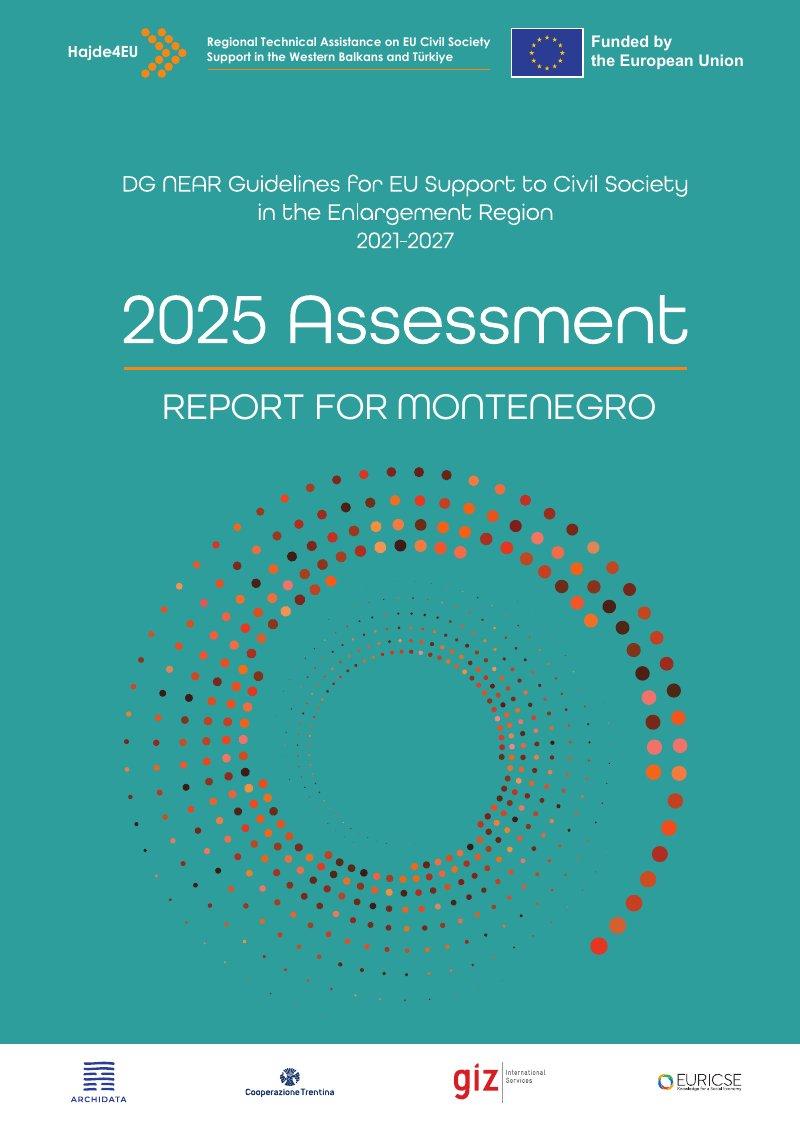
2025 Assessment – Report for Montenegro (English) — English
Available languages: English